

Winter Hot Holding Problems (and Why a Gantry Solves Most of Them)
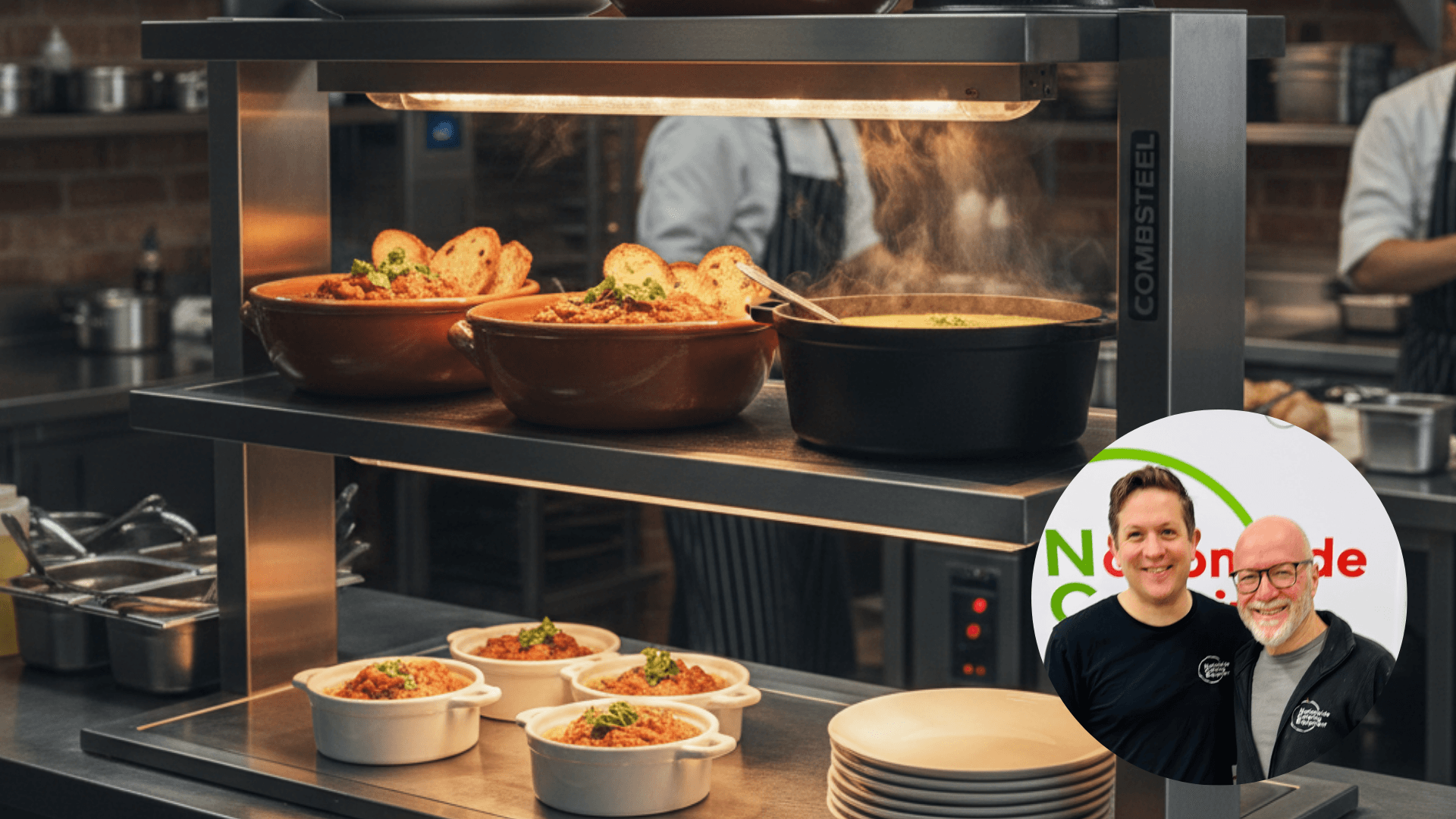
Winter in the UK can be brilliant for footfall, but brutal for hot holding.
Cold air rolls straight into the kitchen every time someone opens the door. Plates lose heat instantly. Staff are busier, queues are longer, and customers expect steaming-hot food and it can feel like the weather outside is trying to work against you.
We speak to a lot of cafés, takeaways and restaurants across the UK, and the same frustrations come up every year… Portions cool down too quickly. The top of the trays dry out before peak service time. Losing consistency during busy spells.
And that’s exactly why so many kitchens turn to a heated gantry over winter (even ones that manage without one the rest of the year).
This doesn’t have to be about expensive refits or buying every shiny piece of kit. It’s mainly about protecting food quality, reducing stress, and avoiding customer complaints when the temperature drops.
We’ll go through it in more detail below.
Why a gantry helps in winter (even if you don’t usually use one)
A gantry does three very simple but very powerful things:
1. It keeps heat where you need it, at the pass
Your food can be perfectly cooked, beautifully plated… but if the pass is cold, the plate pulls heat straight out of it.
A gantry gives you a stable layer of heat on top, so dishes stay hot while the team is plating, garnishing, or waiting for sides.
2. It protects food from cold air and draughts
Winter air is your enemy. It steals heat faster than any other season.
A heated gantry acts like a buffer, stopping every door opening and front-of-house breeze from undoing all your hard work.
3. It supports consistency when service gets hectic
In December especially, no kitchen has time to fight cooling plates, drying edges or customers sending dishes back.
A gantry buys you that time by keeping food at a workable, safe, customer-pleasing temperature long enough for your team to keep up during rushes.
Do you need one to run a kitchen?
Not always. Plenty of places manage without.
But in winter, when temperatures drop and customers increase, a gantry becomes one of those pieces of equipment that simply makes life easier.
And often, it saves more than it costs.
What about the trays? Do they make a difference?
Surprisingly, yes. Far more than most people expect.
Different dishes behave differently under heat. Some dry out, some split, some hold perfectly, some don’t.
That’s why using the right depth of tray makes such a difference:
• Shallow trays help fast-moving items stay crisp and recover heat quickly
• Deep trays keep moisture in for slow-moving dishes like curries, stews, pasta bakes or cooked meats
You don’t actually need a whole collection, even just one shallow and one deep tray can be great for the holding quality.
If you’ve ever wondered why your chips are great but your gravy dries out… this is usually the reason.
Even without a gantry, these winter habits will help
Before we get into the more advanced tips, here are simple habits that improve hot holding for any setup, countertop warmers, bains marie, hot plates or just a busy pass:
• Preheat your equipment — even 10 minutes makes a big difference
• Don’t overfill containers — heat can’t recover properly
• Stir every 20–30 minutes to prevent cold spots
• Use lids during quiet spells
• Top up little and often, not in one big batch
• Warm plates before service
• Keep food away from draughts or extraction fans
These habits come directly from what we see in real kitchens across the country, and they work whether you have a gantry or not.
(Our guide below goes deeper into the why, but these are the quick wins.)
If you do use a gantry, here’s how to get the best out of it
Once you add a gantry into the mix, you can take your winter holding up another level.
Here’s what makes the biggest difference:
1. Give it time to heat properly
Starting cold is the number one reason the first few portions come out cooler. A simple 10–15 minute preheat fixes this instantly.
(page 1)
2. Place it somewhere sensible
Not next to a door. Not under a strong extractor. Not where staff constantly reach across it.
A better spot = hotter food, fewer refills.
(page 1–2)
3. Use the right tray for the right dish
Shallow for fast turnover, deep for anything prone to drying out.
(page 2–3)
4. Keep on top of moisture
Lids, gentle stirring, and avoiding overfilling keep food consistent.
(page 3–4)
5. Train staff using simple, repeatable habits
A quick checklist repeated daily works better than complicated training.
(page 5)
Why this all matters
Winter puts pressure on every part of the kitchen with food costs, energy costs, speed, staffing, and customer expectations. If your hot holding slips, the knock-on effects touch everything:
• lower food quality
• slower service
• more complaints
• higher waste
• more stress on the team
A basic gantry setup solves half of those problems.
Good habits solve the rest.
And together, they give your customers what they came for: hot, consistent, reliable winter comfort food.
Want the Full Breakdown? Grab the FREE Winter Hot Holding Guide - it's a practical, straight-talking resource built for busy UK kitchens.
If you’re thinking about adding a gantry this winter, or you already have one and want to get more out of it, our full guide will help you tighten everything up.
It covers:
✔ the best placement
✔ tray depth explained
✔ temperature targets that actually work
✔ moisture management
✔ service-speed tips
✔ troubleshooting for common winter issues
✔ a 5-minute staff training checklist
Click here to browse our Hot Holding collection
We hope you find it useful. If you have any questions or need any help choosing the best hot holding, feel free to get in touch with us.
Best wishes,
Norman and Richard