

Which commercial fridge do you actually need?
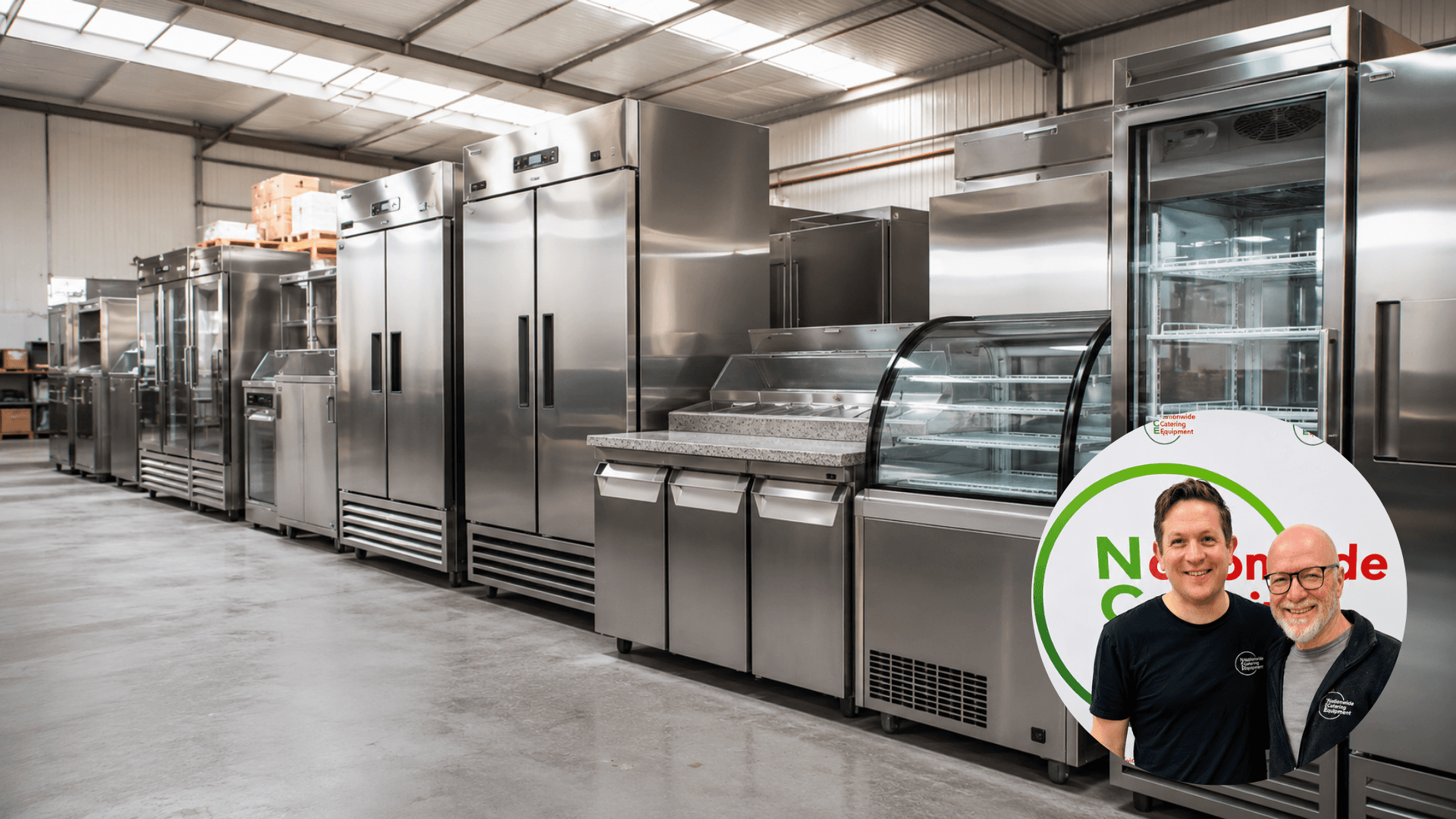
You'd be surprised how often someone comes into the warehouse, points at a row of stainless steel, and says “I need a fridge” without being quite sure what to ask for after that. We do get it, there are loads of different commercial fridges, all designed for slightly different jobs, and the manufacturers don't make it easy to tell them apart. Let us help you with this.
We’ll go through the six main types of commercial refrigeration, what each one's actually for, and how to work out which suits your business. This is based on conversations we have with our customers every week.
1. Upright fridges and freezers
The tall ones with one or two doors. They look a bit like a domestic fridge that's been to the gym.
These are your workhorses. You use them for bulk cold storage, like stock you've prepped earlier, the delivery that came in this morning, or things you need to grab quickly during service. If you run a café, restaurant, takeaway or small hotel, you almost certainly need at least one.
The main decision is single door or double door. A single door (around 600 litres) suits a small operation with one or two chefs. A double door (1,200 litres or thereabouts) is for busier kitchens, or anywhere you're prepping for the whole week on a Monday and need somewhere to put it all.
Prices range from used singles £400 to £900, new £800 to £2,000. Doubles cost roughly twice that. Buying used here makes a lot of sense because the technology hasn't changed much in years. A five-year-old upright from a decent brand will run for another ten if you look after it. Check out our upright fridges range.
2. Undercounter fridges and freezers
The short ones that fit beneath your worktop and are about waist height. The job they're doing is putting cold storage exactly where you need it, without using up any wall space.
For example, a sandwich bar with three or four staff working a line wouldn’t want to walk to the upright every two minutes to grab cheese. They want the cheese right there and that's what an undercounter is for.
People usually place them under the prep counter, under the bar, and under the till area for grab-and-go drinks. It’s brilliant for kitchens where floor space is a bit tight.
Prices range from used £300 to £700, and new £500 to £1,500. Have a look at our undercounter fridges.
3. Prep counters (saladette, pizza prep and the like)
Now we're getting into the cleverer equipment. A prep counter or toppings fridge is basically an undercounter fridge with a worktop on top and a chilled well full of containers for toppings.
If you've ever watched someone build a sub in a sandwich shop from a row of bins (cheese, ham, lettuce, tomato, peppers), that's a prep counter. Same idea for pizza places, salad bars, taqueria, and kebab shops.
The whole point is workflow. Your toppings stay cold, your hands stay in one spot, and you build the dish without running back and forth across the kitchen.
Two things to check when you're shopping for one are how many ingredient bins fit in the chilled well, and how much storage is in the cabinet below.
Prices for these range from used £300 upwards to over £1,000, new £500 to £4,000. Buying a good used prep counter is one of the best value moves you can make because the frames and refrigeration systems on these are built to last a really long time. Check out our topping fridges.
4. Display fridges and serve-overs
These are the customer-facing ones. The glass-fronted units in delis showing off cheeses and meats, or the curved-glass cake display in a café, or the chilled grab-and-go cabinet at the petrol station.
The job here is half storage, half selling. People buy with their eyes, so lighting, layout and visibility matter just as much as the temperature.
A serve-over is the deli counter style, which is glass at the front, staff behind, and the customer points at what they want. A multideck is the supermarket style which is open-fronted and the customer reaches in. Cake displays and patisserie cabinets are usually counter-top units that sit on top of a surface rather than on the floor.
This category has the widest price range of anything we sell and the reason is size and looks. A scratched-up older unit is fine for the back of a sandwich shop but the flagship of a high street deli needs to look the part. Browse our range of display fridges.
5. Bottle coolers and back bar fridges
If you serve drinks, you need one of these. They're built specifically to hold bottles and cans, usually with sliding glass doors so customers can see what's available, and they're designed to look smart at the front of the bar rather than tucked out of sight.
The “back bar” name just means they sit behind a bar. They're shorter than an undercounter fridge in most cases, with shelves spaced for bottles rather than trays.
Places like pubs, cafés with a beer licence, restaurant bar areas, hotel reception bars need these. Anywhere bottles need to be cold and on show.
Prices can range from used £200 to £800, new £500 to £1,800. One thing to watch when you're buying used is that the doors on these get opened constantly, so the seals and hinges take a bit of a hammering. A bottle cooler that's come out of a busy pub can be tired so always check the seals close properly before you commit. Check out our range of bottle coolers.
6. Blast chillers
This is the specialist one. A blast chiller takes hot food and drops it down to a safe storage temperature in 90 minutes or less, which is something a regular fridge can't do. Putting a hot tray of bolognese into a standard fridge is a food safety problem, because it warms up everything around it and breeds bacteria in the danger zone (5°C to 60°C).
If you batch-cook, prep ahead, or you're chasing HACCP compliance, a blast chiller is pretty essential. Production kitchens, care homes, schools, hotels, banqueting venues all rely on them. Smaller cafés and takeaways often don't need one at all.
Prices can range from used £1,300 to £3,500, new £3,000 to £10,000 and up. This is where buying used really makes sense, because a new blast chiller is a huge investment. A used one in good condition does exactly the same job for a fraction of the price. Check out the blast chillers we offer.
How to work out which ones you actually need
Three questions to ask yourself before you start shopping.
What are you cooking, and when?
If you batch-prep, you need uprights and possibly a blast chiller. If you build dishes to order, undercounters and prep counters do more of the heavy lifting.
Where are your staff standing during service?
Cold storage should be a step away, not a walk across the kitchen. Map out where prep happens before you buy anything, because changing your mind after the gas pipe's been run is expensive. Give us a call if you’d like any advice regarding this.
Are customers going to see it?
If yes, then looks matter and you’ll want display equipment rather than back-of-house equipment.
Most independent businesses end up with two or three of the six. A café might have an upright, an undercounter and a cake display. A pizza place runs a prep counter and a couple of uprights. A pub will have bottle coolers and an upright in the cellar.
Come and have a look
Reading about fridges will only get you so far. If you can, pop into the warehouse on the South Coast and we'll walk you round what's actually in stock that day. Bring rough dimensions of where the equipment is going, and ideally a photo of the space. That's all we need to point you at the right thing.
If you can't make it down, give us a ring. A five-minute chat usually answers most questions you have, and we'd much rather you got the right fridge first time than just going for the cheapest one you find online.
A few questions we get asked regularly
What's the most common type of commercial fridge?
For independent caterers, the upright fridge is the workhorse and the most common starting point. After that, undercounters are next, because almost every kitchen needs cold storage at the prep line. Most businesses end up with two or three fridge types rather than just one.
What's the difference between a commercial fridge and a domestic fridge?
Commercial fridges are built to run all day, every day, and to recover quickly when the door gets opened constantly during service. They use stronger compressors, better insulation, and stainless steel surfaces that meet food hygiene rules. A domestic fridge in a commercial kitchen will burn out within a year or two, and your EHO inspector will pick up on it.
How long does a commercial fridge last?
Anywhere from 8 to 15 years if you look after it. The compressor is the part that usually goes first, and that's often replaceable. Regular cleaning of the condenser coils, checking the door seals, and not overloading the unit makes a huge difference. Used commercial fridges from a decent brand still have plenty of life left if they've been properly maintained. Check out this blog post on tips for maintaining your equipment.
Is it worth buying a used commercial fridge?
For most types, yes. Uprights, undercounters and prep counters in particular hold their value and don't change much from one generation to the next. Display fridges are a judgement call because looks matter more. Blast chillers are nearly always worth buying used because the price gap with new is so large.
What temperature should a commercial fridge be set to in the UK?
UK law requires chilled food to be held below 8°C, but most commercial fridges are set between 1°C and 4°C to give you a safety margin. Freezers should be at or below -18°C. Display fridges that hold ready-to-eat food work to the same 8°C rule, but again, run cooler if you can. Keep a digital thermometer in each unit and log it daily. We have all this info here in more detail.
What size commercial fridge do I need for my café or restaurant?
It depends on your menu and your delivery frequency more than your seat count. If you take a delivery once a week, you need more cold storage than somewhere getting drops every other day. As a rough guide, a small café typically runs one upright plus an undercounter. A mid-sized restaurant needs a double-door upright and two or three undercounters or prep stations.
Do commercial fridges need to be hardwired?
Most don't. The majority of commercial fridges and freezers run on a standard 13 amp three-pin plug, just like a domestic appliance. Larger walk-ins and some industrial units need a hardwired connection through an electrician, but that's the exception rather than the rule.
What's the difference between a prep counter and an undercounter fridge?
An undercounter fridge is straight storage at waist height. A prep counter does the same job but adds a chilled well on top, with bins (called GN pans) for ingredients. If you're building dishes to order from multiple toppings, you want a prep counter. If you just need cold storage near the worktop, an undercounter is cheaper and simpler.
Norman and Richard