
How to Spot Red Flags When Buying Used Catering Equipment
Buying used catering equipment can be unnerving. You're handing over your money for equipment your business depends on, often to someone you've never met before. And the only way to know for sure it works is when it's in your kitchen and switched on.
If it goes wrong, it's not just the cost of the equipment but the fridge full of stock you can't keep cold, a service you can't run, or days spent chasing someone who won't pick up the phone. Totally frustrating.
Used equipment is still one of the best ways to save money on a commercial kitchen. You just need to know who you're buying from and what to look for. Most bad buys show warning signs before you pay, and once you know what they look like, they're easy to spot.
Between us, we've spent over 45 years in the catering industry and these are the red flags we see most often and warn our customers against. We've split them into three parts: the listing, the seller and the deal, so you know exactly what to look for to make a trustworthy purchase for your business.
In a nutshell
The biggest red flags when buying used catering equipment are listings with no real photos or measurements, sellers who say it was "working when last used" instead of tested, fridges that "just need a top-up of gas", and sellers you can't get hold of before you've even paid. A good seller tests, cleans, measures and photographs every item, can answer questions about it, and picks up the phone. That's how we train all of our NCE team.
Red flags in the listing
The listing is your first look at the equipment, and often your only one before you pay. It tells you a lot about the seller too.
1. The photos don't show the actual unit
You'll notice stock images from the manufacturer, one blurry photo, or shots that only show the front.
Treat this as a red flag because if you can't see the real unit, you can't see the imperfections that usually accompany used catering equipment. There may be unphotographed dents, rust, split door seals or missing shelves. A common complaint from buyers is that the equipment turns up looking nothing like the advert, or dirty inside.
What to ask: "Can you send me photos of this exact unit, inside and out, including the data plate?" A seller with nothing to hide will happily do it or already provide it in their listing.
2. No measurements, power supply or gas type
You'll often see vague listings, for example one that just says "double door fridge" or "6 burner range", with not much more description.
That's how equipment ends up not actually fitting through your kitchen door, or arriving on the wrong power supply. A three phase oven won't run on a single phase supply, and a natural gas range won't run on LPG without being converted. Imagine finding this out on delivery day, when it's too late and the seller won't accept a return.
What to ask/look for: the height, width and depth, the power supply (13 amp plug, single phase or three phase), and for gas equipment, whether it's natural gas or LPG. If the seller doesn't know, that tells you something too.
Measuring your space properly is just as important. Our guide to small commercial kitchens covers getting equipment through the door, and our single phase vs three phase guide explains the power side.
3. "Working when last used" or "just needs a top-up of gas"
Watch out for phrases like "working when removed", "was working fine", "untested" or "sold as seen".
These usually mean nobody has switched it on and checked it. It might have been pulled out of a closed-down kitchen, or bought in and sold straight on. Some resellers do exactly that, without testing or cleaning anything before it gets to you.
With fridges and freezers, look out for "just needs a top-up of gas" or "needs a regas". Customers tell us they see this all the time, and although it sounds like a small job, it usually means there's a gas leak.
A commercial fridge is a sealed system. When it's working properly, it never needs topping up, because the gas doesn't get used up. If it's low, it has usually leaked out somewhere. If you top it up without finding and fixing the leak, it will just leak out again and finding and fixing a leak can cost more than the fridge is worth.
What to ask: "Has it been tested, and what did you check?" and wait for a clear answer. With a fridge, ask whether it holds its temperature and whether it has ever needed regassing.
Red flags in the seller
Good equipment from the wrong seller can still go badly. These are the signs that tell you who you're really dealing with.
4. They can't answer basic questions
A trustworthy seller would know how old the equipment is and where it came from, and will give you a straight answer if you ask. They will also understand the industry, be able to advise if it's the right equipment for you and tell you how it works.
Someone who doesn't know the equipment can't tell you if something is wrong with it, as is often the case with house clearances and people selling off a closed business. Watch out for "private sellers" with lots of similar listings too. They're usually dealers, and they may not have tested anything before reselling.
What to ask: You may want to ask how old the equipment is, what condition it's in, whether it's been serviced and where it came from. Someone who knows equipment will answer these without putting you off.
5. You can't get hold of them before you've even paid
Your calls go to voicemail, your emails take days to come back, or there's a contact form and nothing else.
This was the number one complaint from customers who came to us after a frustrating experience with online sellers. They say phones are never answered, live chats go nowhere and callbacks never happen. You'll find the same stories on business forums and review sites. If a seller is hard to reach while they're trying to sell to you, it won't get easier once they have your money. In fact, it gets worse, especially if you're trying to get a refund for being given a faulty item or even the wrong item altogether.
What to do: ring them before you buy. It's the simplest test there is. Ask a question or two and see how you're treated.
6. Nobody can get parts for it
Be wary of a brand you've never heard of, a price that seems too good to be true, or no UK contact details for the manufacturer.
Most catering equipment needs a repair at some point. If no engineer can get the parts, a small fault can mean replacing the whole unit. Our customers tell stories of fridges, fryers and ice machines bought online that failed them within months, and no one was able to fix them.
What to ask: "Who makes it, and can parts still be bought in the UK?" Well-known commercial brands are usually easier and cheaper to repair, even when they're a few years old.
Red flags in the deal
You've found the equipment and the seller seems fine. Before you pay, it's worth knowing exactly what happens next.
7. Nobody will say what happens if it's faulty
Some listings say "sold as seen" or "no returns". Others don't mention at all what happens if the equipment doesn't work.
If it arrives faulty, you want to know where you stand before you've handed over the money rather than after. Business owners tell us of weeks of chasing refunds when buying online, and arguments over who pays to send it back.
What to ask: "If it's faulty when it arrives, what happens?" Get the answer in writing, and keep your receipt. Our guide to warranties and returns explains the difference between warranties and returns policies.
8. No clear plan for delivery or collection
The listing says "collection only", or gives a delivery price with no detail about what's included.
Commercial equipment is heavy and awkward, and delivery isn't always as simple as it sounds. Buyers get caught out when they don't know what's included until the lorry turns up. If you're collecting, you need the right vehicle and enough people to lift it safely.
What to ask: What does delivery include? Will it fit through my door as it is, or does it need taking apart? When will it arrive? If you'll need help getting it inside, say so before you order.
What a good used equipment seller does
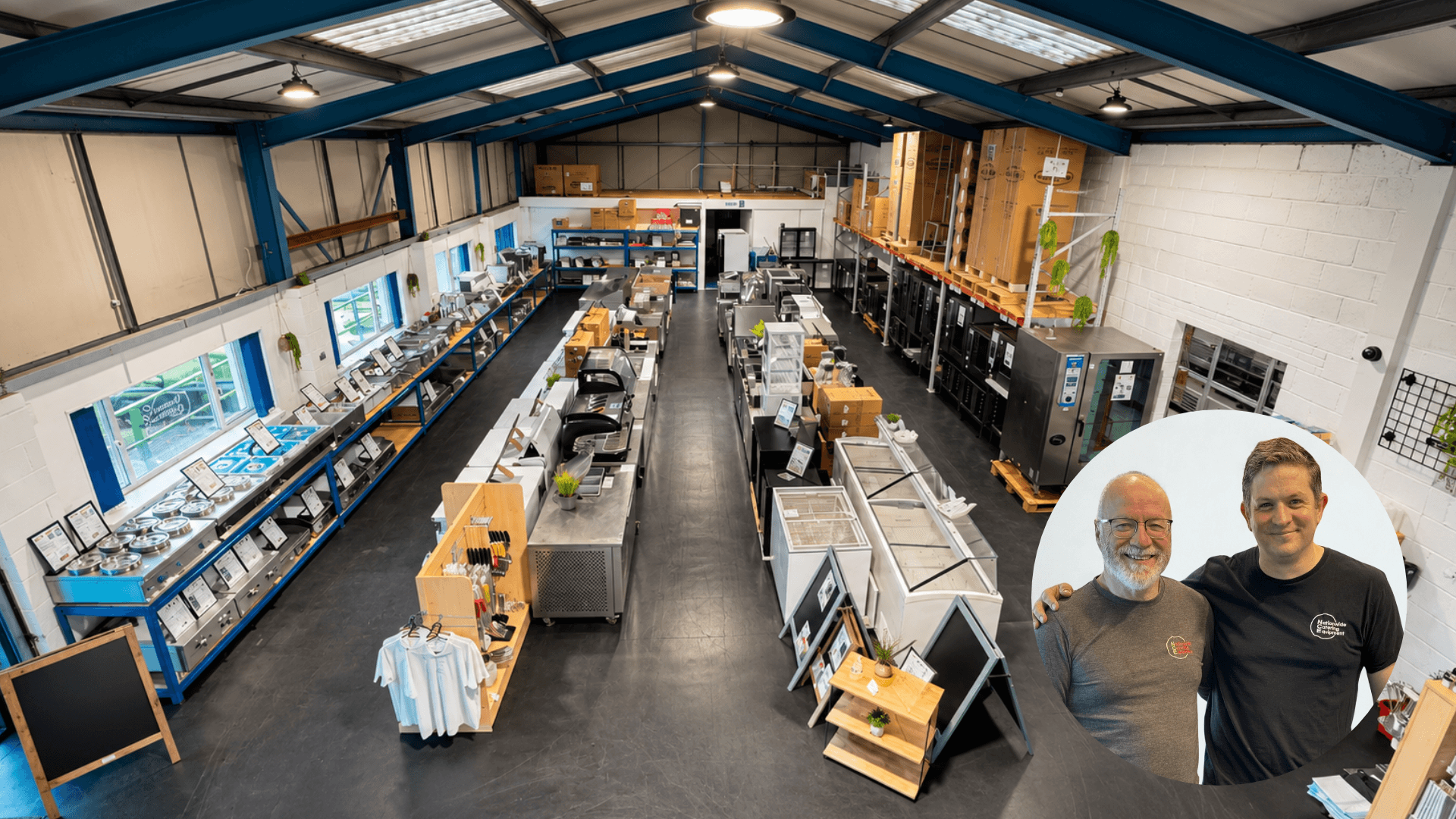
A good seller has already done the checking before the equipment is listed. Here's what happens to every piece of used equipment that comes into our Nationwide Catering Equipment warehouse.
We test it. Gas equipment is checked for working burners, thermostat, safety cut-out and ignition. Fridges and freezers are checked to make sure they reach and hold the right temperatures, the fans work, the motors run without strange noises, and there's no sign of a gas leak.
We deep clean it. Inside and out, so it arrives ready to use.
We measure it. So you know it will fit before it arrives.
We photograph it. The actual unit you'll be buying, not a stock image.
Then we list it. The listing is detailed with all measurements, delivery and other important information.
We're a family-run business on the South Coast, and when you ring, you'll speak to someone who knows the equipment. You're welcome to come to the warehouse and see it for yourself before you buy, and you can even ask to see it working. Our used equipment also comes with a 14-day returns policy for faults.
Questions to ask before you buy used
Screenshot these, or keep them on your phone for your next viewing.
Has it been tested, and what exactly did you check?
Can I see photos of this exact unit, including the data plate?
What are the measurements, and what power or gas supply does it need?
How old is it, and has it been serviced?
Why is it being sold?
Can parts still be bought for it in the UK?
If it's faulty when it arrives, what happens?
What does delivery include, and can you help get it inside?
Frequently asked questions
Is it safe to buy used catering equipment?
Yes, as long as it has been properly tested and you buy from someone who knows what they're selling. A lot of commercial equipment is built to last 15 years or more. The risk comes from untested equipment sold by people who can't tell you its history or help if something goes wrong.
What does "needs a regas" or "needs a gas top-up" mean on a used fridge?
It usually means the fridge has a gas leak. A commercial fridge is a sealed system, so a working one never needs topping up. If the gas is low, it has escaped somewhere. Topping it up without fixing the leak only buys you time before it fails again.
What should I check on a used commercial fridge?
Check it reaches and holds the right temperature, the fans run, the compressor runs without loud or unusual noises, and the door seals are intact all the way round. We do these checks for you when you buy with NCE. Ask whether it has ever needed regassing, and look at the condition inside.
What should I check on used gas catering equipment?
Check every burner lights and stays lit, the ignition works, the thermostat controls the heat, and the safety cut-out works. We do these checks for you when you buy with NCE. Make sure it matches your gas supply, natural gas or LPG. Gas equipment must be installed by a Gas Safe registered engineer.
Does used catering equipment come with a warranty?
Usually not. Used equipment is normally sold with a short returns period for faults instead. Ask the seller what's covered and for how long before you buy.
Buy used with confidence
Used equipment can save you a lot of money. The trick is buying it from someone who has already done the checking for you, and who will still pick up the phone once you've paid.
Every piece of used equipment we sell has been tested, cleaned, measured and photographed before it goes on the website. If you're not sure whether something is right for your kitchen, give us a ring and ask. That's what we're here for.
Browse our tested used equipment · Call us on 01202 096 447 · Plan a visit to the warehouse
Free download: Repair or Replace? Already have equipment that keeps playing up? Our quick guide helps you decide whether it's worth fixing or time to replace it. Download the guide