
Is Hard Water Damaging Your Catering Equipment? How to Stop Limescale
Is Hard Water Ruining Your Commercial Kitchen Equipment? Here's How to Stop It
What limescale does to your equipment, how to spot it, and the simple routine that stops it
Nationwide Catering Equipment | nationwidecatering.co.uk
The symptoms are easy to spot. Your glasses are coming out of the washer cloudy, the kettle furred up again, your combi doesn't steam like it used to, or the coffee machine is slowing down. You may see these and think that your equipment is on its way out or faulty.
A lot of the time, it isn't and it's actually the water. Hard water does the same thing to kitchens up and down the country, and most people don't clock it until they’re having to pay for repairs.
We're based on the South Coast, where hard water is a real issue, so we see this every day. But we sell and deliver all over the country, and we get asked about it everywhere, because most of the UK is in the same boat. So let us tell you everything you need to know, such as what hard water is, what it does to your equipment, and the simple routine that saves it.
First, is hard water even your problem? For most of the country, yes
This isn't a southern thing. More than 60% of homes in the UK are supplied with hard water, so wherever you are, the odds are you've got it.
Roughly speaking, the water is hard across most of the south, the midlands and the east like London, East Anglia, Lincolnshire, up towards Hull, and along the South Coast, us here in Dorset included. It tends to be softer in Scotland, Wales, the North West around Manchester and Liverpool, and down in the South West. We’ll let you know why in a second.
If you want to know for sure, there are easy ways to check. Pop your postcode into your water supplier's website as they publish the hardness of your local supply. Or just look around your kitchen… a kettle with limescale buildup, white scale round the taps, spots on your glasses all show that you live in a hard water area.
What hard water actually is, and why it's there
Without giving you a science lesson, here’s what the term means. Rain is naturally soft, so the ‘hardness’ comes from what the water picks up on its way to our taps.
In some parts of the country where the ground is chalk and limestone, rainwater soaks through the rock and dissolves calcium and magnesium out of it. Those dissolved minerals are what we mean by hard water. The more the water picks up, the harder it is. Where the ground is granite and moorland instead, like a lot of Scotland, Wales and the North West, the water picks up very little and stays soft. Lucky for them!
In a drinking glass those minerals are actually harmless. The trouble starts the moment you heat the water, and that's where your equipment comes in.
Those minerals sit happily dissolved in cold water. Heat forces them back out as a hard, chalky solid, and that solid is limescale. It starts forming from around 35 to 40 degrees and gets worse the hotter the water. Every piece of equipment that heats water runs well above that, so it's a magnet for scale.
The worst is that this build up can happen in weeks. Also, scale builds on the hottest surfaces first, which are the parts working the hardest, like the heating elements, the boiler, the jets and nozzles. Once they're coated, they can't shed heat or move water properly. They overheat, strain, and in the end they fail. So a mineral that's harmless can wreck the parts that cost the most to replace. See why it’s worth paying attention to it?
What it does, machine by machine
You’ll be surprised how many different pieces of equipment can be affected by this.
Warewashers (dishwashers and glasswashers)
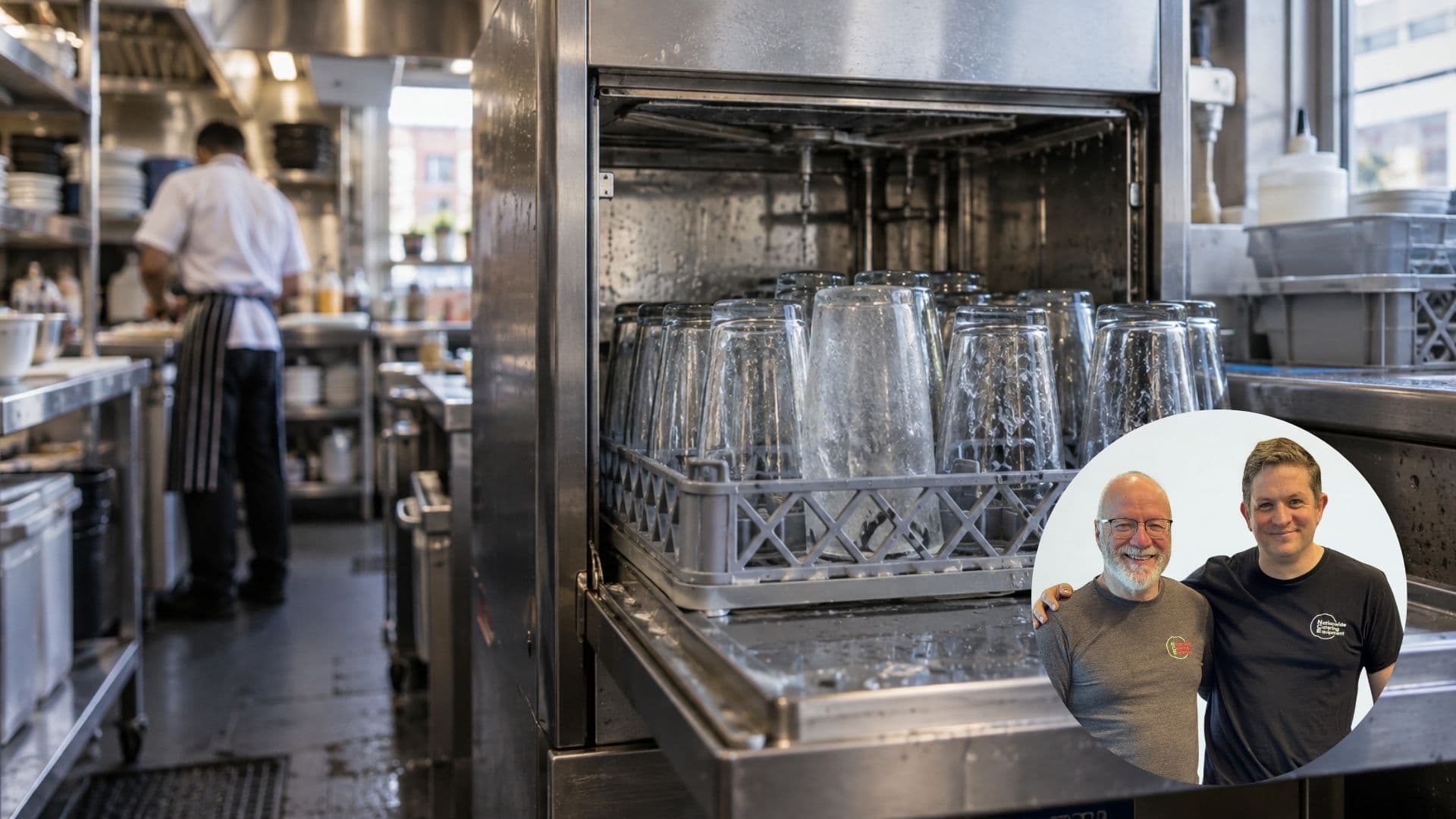
Cloudy, spotted glasses are the sign everyone notices first but this only means that scale is already coating the heating element and blocking the spray jets, so wash quality drops and the machine works harder to do the same job. If you don’t do anything it can do permanent damage to the equipment.
Combi and steam ovens
This is the expensive one, as I’m sure you can imagine. Scale builds up in the steam generator, the nozzles and the heat exchanger which means you end up with weak steam, uneven cooking and varying temperatures. If it’s left like this, the scaled-up boiler can need replacing (which is a four-figure job on most combis).
Ice machines
Scale makes the ice cloudy, soft and smaller than it should be. It also cuts how much the machine can make and pushes the running costs up as it fights to keep up.
Boilers, coffee machines and hot taps
Anything that boils water builds up limescale fast. You end up with a slower heat-up, lower output, higher bills and a shorter life out of the machine. Such a waste for an avoidable problem.
How it costs you
It pushes your energy bills up
Scale works like a blanket over the heating element. The machine has to burn more energy to reach the same temperature, and that's happening long before anything actually breaks. According to the Carbon Trust, just 1mm of scale on a heating surface can add around 7% to the energy it uses. If it builds up to 3mm, figures from British Water show the loss at up to a quarter. That's your money going up in wasted heat every single day.
It can cost you your warranty
Most manufacturers put water quality on you, the operator. Brands like Rational publish the water conditions their ovens need, and if limescale damage shows up on water that hasn't been looked after, they can turn down the warranty claim. So a four-figure repair you assumed was covered might not be. The secret is in routine care, which we will get to.
How to spot it early
Keep an eye out for these:
• Cloudy or spotted glasses coming out of the washer
• Ice that's soft, cloudy or smaller than usual
• Equipment taking longer to heat up than it used to
• Weak steam or uneven cooking in the combi
• White, chalky, crusty deposits around elements, jets and seals
• Energy bills creeping up for no obvious reason
• More little faults and call-outs than you'd expect
If you can tick a few of those, scale is almost certainly the reason. We've put a useful checklist into a free download for you.
How to protect your equipment
At last some good news! You can't change your water supply, but hard water is actually very manageable. A simple routine can stop scale ever becoming a bigger problem. This is the routine we'd suggest.
Every day
Empty and clean the filters in your warewasher. Wipe down interiors. Run any self-clean cycle your combi has. Empty drip trays, and have a quick look at water inlets for blockages.
Every week
If your warewasher has a built-in softener, top up the salt (usually about a pint). Check and clean the spray arms and jets so water's still getting through properly. Give the trays and door seals a proper look while you're there.
Every month
Descale the dishwasher. Descaler in, leave it to sit, run a few empty cycles, then flush it through with clean water. Descale the combi to keep the steam working as it should, and check your elements for that chalky buildup so you can deal with it before it hardens on.
Every so often, get it serviced
Some jobs are worth handing to an engineer. A professional service and deep clean once or twice a year keeps scale in check in the places you can't easily reach, and catches small problems before they turn into big ones. Ice machines in particular want a full professional clean roughly every six months, with a quick check every few weeks in between.
Whatever equipment you buy, check what the maker says about water and descaling in the manual. Sticking to it doesn’t just make sense, but it often keeps the warranty valid.
What this means for you
Hard water is a fact of life for most of the country, us on the South Coast included. It won't ruin your kitchen overnight but if it’s left to build up it can run your bills up and shorten the life of some of your most expensive equipment. A few minutes of care a week can help your equipment last you years.
When you're buying, aim for equipment that's built well and backed by people who'll help you look after it. Everything we sell is tested before it goes out and comes with advice and aftercare. If you're not sure whether something's scaling up, or what to look for in your next machine, we're always happy to talk it through with you.
Download our free one-page Catering Equipment Hard Water Guide you can print and stick on the wall or refer back to. Download the Catering Equipment Hard Water Guide.
Got a machine that's scaling up, or a question about your next one? Get in touch, we're always happy to help.
Best wishes,
Norman and Richard
Nationwide Catering Equipment
Frequently Asked Questions
Does hard water damage catering equipment?
Yes. Hard water contains dissolved calcium and magnesium, and when the water is heated those minerals come out as limescale. It coats heating elements, jets and boilers in anything that heats water, which makes the equipment work harder, use more energy and wear out sooner. Dishwashers, glasswashers, combi ovens, ice machines, boilers and coffee machines are all affected.
How do I know if I'm in a hard water area?
More than 60% of the UK has hard water, so it's likely. The easiest way to check is to enter your postcode on your water supplier's website, as they publish the hardness of your supply. Everyday signs include a scaled-up kettle, white scale around taps, and spots or cloudiness on glasses.
What is limescale and why does it form?
Limescale is the hard, chalky deposit left behind when hard water is heated. The calcium and magnesium that stay dissolved in cold water are forced out as a solid once the water warms up, from around 35 to 40 degrees. It sticks to the hottest surfaces first, which are usually the parts doing the most work.
Which catering equipment is most affected by limescale?
Anything that heats or holds water. Warewashers, combi and steam ovens, ice machines, water boilers, hot taps and coffee machines are the main ones. Combi ovens tend to be the most expensive to put right, because a badly scaled boiler can need replacing.
Can limescale void my equipment warranty?
It can. Many manufacturers, including brands like Rational, set out the water conditions their equipment needs and make water quality the operator's responsibility. If a fault is caused by limescale on water that hasn't been managed, the manufacturer may refuse the warranty claim. Always check the manual for the maker's water and descaling requirements.
How often should I descale a commercial dishwasher or combi oven?
As a general rule, descale a commercial dishwasher monthly, and descale a combi oven monthly too (or run its own descaling cycle as the manufacturer advises). In very hard water areas you may need to do it more often. Daily filter cleaning and weekly jet checks help keep scale from building up in between.
Does hard water increase energy bills?
Yes. Scale acts like a layer of insulation on a heating element, so the machine burns more energy to reach the same temperature. Figures from the Carbon Trust suggest just 1mm of scale can add around 7% to energy use, and heavier buildup can push that much higher.
Is hard water only a problem in the South of England?
No. Hard water covers most of the south, midlands and east of England, but plenty of other areas have it too. It's softer in Scotland, Wales, the North West and the South West, but with more than 60% of the UK on hard water, most kitchens are affected wherever they are.