
How to equip a new commercial kitchen without blowing your budget
Recently we talked to someone who came in with an exciting business plan in one hand and a tight budget in the other. They'd signed a lease and now they needed to fill it with equipment. The first question is nearly always the same.
“What's the cheapest way to fill my kitchen?”
It's a fair question. When you're opening your first place, every pound counts, and equipment is one of the biggest costs you'll face before you've sold a single coffee. So this guide is the answer we gave them, with some more details for you too. How much it really costs, where to save, where not to, and the mistakes we watch start-ups make again and again.
How much does it cost to equip a commercial kitchen in the UK?
There's no single number, because a coffee van and a 60-seat restaurant are different worlds. But here's a realistic picture for 2026, drawn from across the industry.
A small café or food truck kitchen typically lands somewhere between £30,000 and £50,000 for a full fit-out, with the equipment itself making up a big chunk of that. A sit-down restaurant kitchen runs higher, often £18,000 to £65,000 just for equipment depending on whether you go budget, mid-range or premium.
For the equipment alone, a useful rule of thumb is that it usually accounts for 40 to 50 per cent of your total setup budget. The rest goes on design, fit-out, ventilation, electrics, gas and compliance.
The good news for anyone starting out is that you can bring those equipment numbers down a long way without cutting corners on the important stuff. That's the whole point of this guide.
Start with your menu, not a shopping list
The single most expensive mistake we see is people buying for the kitchen they imagine in two years, not the one they're opening next month.
Before you buy anything, write down your opening menu. Then list only the equipment those dishes actually need. A café serving coffee, toasties and cakes does not need a six-burner range. A burger van does not need a combi oven. Ask us if you're not sure, that's what we're here for.
You can always add equipment when the menu grows and the money's coming in. What you can't easily do is get back the cash you sank into a fryer you use twice a week.
Start small and buy the rest when the business grows.
The biggest saving on the table: buy used
Here's the one that makes the most difference. Buying used commercial equipment, rather than new, is the fastest way to cut your setup costs, often by half or more.
There's a myth that used equipment is a gamble. It isn't, as long as it's been properly checked. Well-maintained used equipment is every bit as safe and reliable as new. A lot of commercial equipment is built to run for fifteen or twenty years, and the technology in a fridge, a prep counter or a stainless steel bench hasn't changed much in a decade. A five-year-old upright fridge from a decent brand will happily run for another ten if you look after it.
The key is buying from someone who tests and prepares stock before it goes out. That's the difference between a smart saving and a risky punt off a marketplace listing with no comeback.
This is bread and butter for us. Around 70 per cent of what we sell is used, all of it tested and checked before it leaves the warehouse, and a fair bit of it is in excellent or near-new condition (more on that in a second).
What to buy used, and what's worth buying new
You don't have to go all-or-nothing. The smartest start-up kitchens mix the two. Here's how we'd split it.
Good to buy used:
Refrigeration: uprights, undercounters, prep counters, display fridges
Stainless steel: benches, sinks, shelving, tables (these last forever)
Ovens and ranges from reliable brands
Hot holding and bain-maries
Food prep equipment: mixers, slicers, processors
Worth considering new:
Anything with a short, hard life and heavy wear, like glasswasher and dishwasher pump components
Specialist equipment where you want the full manufacturer warranty
Items where a current energy rating will pay for itself on the bills
A quick word on “new” bargains. We regularly pick up practically new equipment from people who bought it online, found it didn't fit or wasn't what they were looking for, and had to sell it on often at a loss as they couldn't return it. That means you can sometimes get genuinely new equipment at used prices. Always worth asking what's in.
Don't forget the costs that aren't “equipment”
This is where budgets can go over. The equipment is only part of the bill. Plan for these from day one.
Power supply. Bigger equipment needs more power, and some of it needs three phase, which most small premises don't have. Upgrading your supply can run into thousands of pounds and weeks of waiting. Always check what your premises has before you buy. (We've a full guide on single phase vs three phase if you need it.)
Sinks and handwashing. UK food hygiene rules expect proper washing facilities. Ideally that's one sink for food and a separate one for equipment, plus a dedicated hand wash basin with hot and cold running water. In smaller operations one wash-up sink can be acceptable, but you'll always need a separate basin just for handwashing. Factor the stainless steel in.
Getting it through the door. Sounds obvious, but it isn't. We've lost count of the double-door fridges and ranges that turned up and wouldn't fit through the kitchen door, ending up with door frames taken down or simply not delivered. Do measure your access before you order anything big.
The cheap option that costs you more
We sell good budget equipment and we're glad to. For a lot of start-ups it's exactly the right call. But “cheapest” and “best value” aren't always the same thing, and it's worth knowing the difference.
The classic false economy is the bargain unbranded fryer or fridge bought from faceless companies online that saves you £200 up front, then dies in your first busy summer and takes a day's trade with it. When you're depending on one piece of equipment, reliability is the saving, not the sticker price.
So the honest advice is this. On the workhorses you lean on every service, your main fridge, your main cooking line, buy quality, even if that means buying it used to afford it. On the bits that get lighter use, budget is fine. Spend where it counts and save where it doesn't.
That's how you equip a kitchen cheaply without it costing you later.
A quick start-up budget checklist
Run through this before you spend your money.
Write your opening menu and list only the equipment it needs.
Set a budget and remember equipment is roughly half of your total setup cost.
Check your power supply (single or three phase) before buying anything big.
Measure your kitchen access so everything actually fits through the door.
Decide what to buy used (most of it) and what's worth buying new.
Buy used from a seller who tests stock and offers support.
Budget for sinks, handwashing, ventilation and gas safety checks.
Register your food business with your local council (it's free, and you must do it at least 28 days before opening).
Spend on the equipment you rely on most. Save on the rest.
Free download: We've put together a one-page Start-Up Equipment Checklist you can print and take round the kitchen, or use to plan your budget. Free to download from our resources page at nationwidecatering.co.uk/resources or by clicking HERE.
How NCE can help
We've helped a lot of people open their first place, and equipping a kitchen on a budget is one of the things we're best at.
Most of our stock is used and fully tested, which is exactly what you want when the budget's tight and the equipment still has to work from day one. We can also mix used and new in a single kitchen plan to hit your budget without dropping reliability where it matters.
And because we pick up so much barely-used and ex-display equipment from people who bought wrong, there's often a genuine new bargain sitting in the warehouse, so do keep checking in.
If you're starting out, the best thing you can do is talk to us before you buy. Bring your menu and rough dimensions of the space, or just give us a ring. Five minutes on the phone can save you from the expensive mistakes we see most weeks, and point you straight at the right equipment for your budget.
Browse used equipment · Browse refrigeration · Browse cooking equipment
Norman and Richard
A few questions we get asked regularly
How much does it cost to equip a commercial kitchen in the UK?
It depends on the type of business. A small café or food truck kitchen typically costs £30,000 to £50,000 for a full fit-out, while a restaurant kitchen often runs £18,000 to £65,000 for equipment alone. As a rule of thumb, equipment makes up around 40 to 50 per cent of your total setup cost. Buying used can cut the equipment portion of that bill by half or more.
What's the cheapest way to equip a new commercial kitchen?
Buy used from a seller who tests their stock and offers returns on faulty items, buy only what your opening menu needs rather than overbuying, and mix used with new. The cheapest route overall is usually a well-chosen used setup, spending a bit more on the equipment you rely on most and saving on the lighter-use items.
Is it safe to buy used commercial catering equipment?
Yes, as long as it's been properly checked. Well-maintained used equipment is just as safe and reliable as new, and much of it is built to last fifteen to twenty years. Buy from someone who tests stock before sale and offers returns on faulty items.
What equipment do I need to start a food truck?
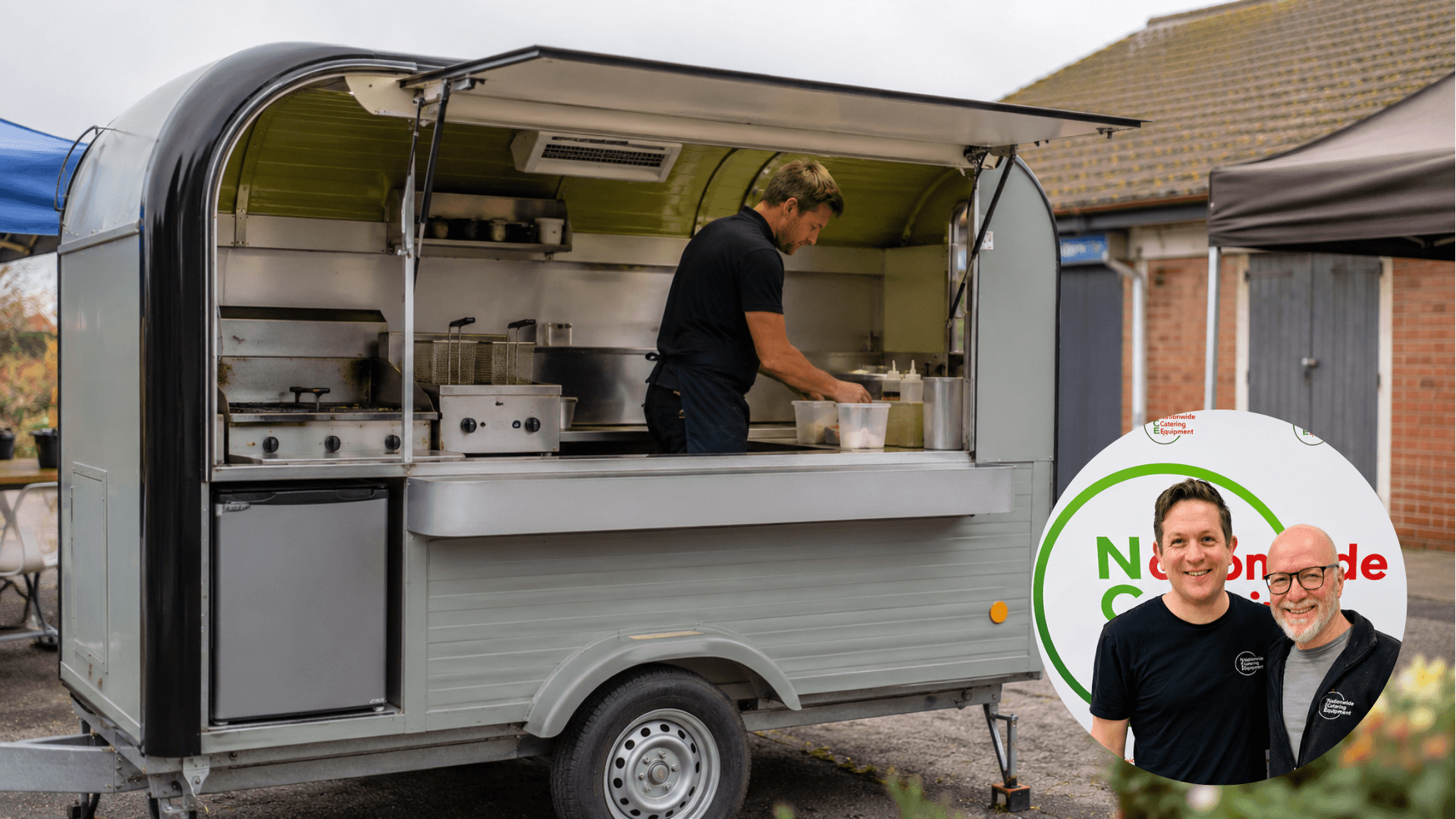
It comes down to your menu, but most food trucks need a cooking line (griddle, fryer or hob), refrigeration to store stock safely, hot holding for busy periods, and prep surfaces. Keep it compact and plug-and-play. Budget roughly £5,000 to £15,000 for equipment, and don't forget gas safety certification (a CP44 for mobile units) and your food business registration.
Should I buy or lease catering equipment?
Buying used is usually the cheapest option overall and you own the equipment outright. Leasing spreads the cost and keeps cash in the business early on, which suits some start-ups until profit is steady, but you'll pay more across the term. For most independents on a tight budget, buying good used equipment is the better value.
Do I need two sinks in a commercial kitchen?
Ideally you'll have one sink for washing food and a separate one for washing equipment, plus a dedicated hand wash basin with hot and cold running water. In smaller operations a single wash-up sink can be acceptable for both food and equipment, provided it doesn't compromise food safety, but you'll always need a separate basin just for handwashing.
Do I need to register my food business?
Yes. Any business that stores, prepares, sells or distributes food must register with its local council. Registration is free and you must do it at least 28 days before you open. You can't be refused, and it's the first step towards your food hygiene rating.
What should I buy new and what can I buy used?
Buy used for refrigeration, stainless steel benches and sinks, ovens and ranges from reliable brands, hot holding and food prep equipment. Consider new for high-wear items, anything where you want the full manufacturer warranty, or where a better energy rating will pay for itself. Most start-up kitchens are best built from a mix of the two.